What Is Better in Meme Coin Trading, Narrative Timing or Risk Discipline, and Why
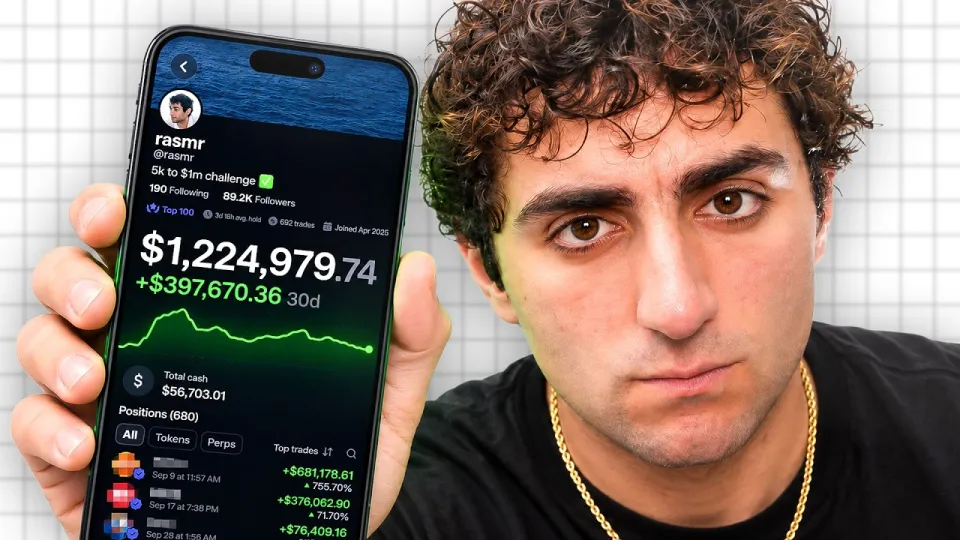
Video: 5 Years of Memecoin Knowledge in 12 Minutes
Want articles like this for your own video to promote it on YouTube and Google? Order them through the Telegram bot @sat_sit_bot. The bot writes and publishes the articles itself (with your YouTube video embedded) on popular topical websites (no ads). Your first 50 articles are free.
· based on the channel rasmr
Meme coin trading is best approached as a discipline of narrative timing plus strict risk control, not as a hunt for a lucky ticker. The trader behind the rasmr breakdown of five years of memecoin experience frames it the same way: understand who launched the token and why, know at what market cap early buyers usually sell, and never let emotions decide the exit. If you want to trade alongside that workflow, you can start with a registration via fomo.family/r/rasmr_eth.
Why meme coin outcomes depend on narrative timing more than chart patterns
A meme coin is a token whose value rests almost entirely on attention, community and story rather than on cash flow, and that makes timing the dominant variable. The same chart shape that works on a large-cap asset fails on a low-float memecoin because the order book is thin and a handful of wallets can move price. The practical question is not "is this chart bullish" but "is this narrative early, and who already knows about it".
Three elements decide whether you are early or late:
- The narrative — what story the coin rides (an animal, a public figure, a cultural moment, an AI-agent theme). Narratives have a shelf life measured in days to weeks.
- The launch source — who released the token and which circle announced it first. Coins pushed to a small connected group before public launch simply have a head start that later buyers pay for.
- The market cap ladder — the levels at which earlier participants typically take profit. Knowing these levels in advance tells you where supply is likely to appear.
The market cap ladder and why early buyers sell where they do
Market cap, not token price, is the useful unit for judging a memecoin's stage. A coin at a few hundred thousand dollars of capitalization is a different asset from the same coin at tens of millions: the first is a lottery ticket with room to move, the second is a distribution event where early wallets are already deep in profit.
A workable framework looks like this:
- Entry stage: sub-$1M capitalization, thin liquidity. Highest upside, highest chance of zero.
- Validation stage: low single-digit millions, with visible community growth and holder count expanding. Momentum traders enter here.
- Distribution stage: double-digit millions and above. This is where people who bought at the bottom start selling into new excitement.
The lesson from five years of watching these cycles is blunt: the person holding a seven-figure unrealized gain and refusing to sell is not a diamond hand, they are an exit liquidity provider for someone else. Profit that is not realized is a number on a screen.
The four mistakes that wipe out meme coin accounts
Emotion is the single largest source of losses in this niche, and it shows up in four repeatable patterns. Naming them makes them easier to interrupt in real time.
- Averaging down a loser. Buying more of a coin that is bleeding because "it has to bounce" turns a small loss into a large one. In memecoins, a broken narrative rarely recovers.
- Round-tripping a winner. Watching a position go up 50–100% and giving it all back because you wanted more. A partial take-profit at the first target prevents this.
- Top-blasting on excitement. Entering after a vertical candle because the chart looks unstoppable — usually the exact moment early wallets are selling.
- Revenge trading. Trying to recover the previous loss immediately with a bigger size on a worse setup.
A simple countermeasure: decide the invalidation level and the first take-profit before you click buy, and write them down. If price hits either, you act — no renegotiation with yourself.
How to screen a meme coin for rug-pull risk
A rug is a token where the launch team removes liquidity or dumps supply on holders, and most of the warning signs are visible before you buy. Screening takes minutes and saves accounts.
- Liquidity and its lock status. Check how much liquidity sits in the pool and whether it is locked or burned. Unlocked liquidity in a fresh pool is an invitation to pull it.
- Holder concentration. If a handful of wallets hold a large share of supply, those wallets are the exit. Look at the top holders and whether they are linked.
- Launch wallet behavior. Follow what the deployer wallet does: funding pattern, whether it sold into the first pump, whether it holds.
- Contract permissions. Mint authority, freeze authority and hidden tax functions are red flags. A coin that can be minted at will is not a fixed-supply asset.
- Narrative durability. Ask whether the story survives tomorrow. A coin tied to a live event has a countdown; a coin tied to a durable community does not.
None of these checks makes a memecoin safe — they only remove the obvious traps so the remaining risk is the market's, not a counterparty's.
Common questions traders ask before their first meme coin position
Beginners tend to ask the same things, and the answers are mostly about sizing. Start small: capital you can lose entirely without changing your life, because a meaningful share of these tokens go to zero. Do not treat a first profitable month as proof of skill — in a strong memecoin cycle, almost everything goes up, and that hides bad process.
On the "what about a coin tied to a game or film release" question: event coins are tradable, but the event is the exit. The narrative peaks at the announcement and the launch, and the crowd that arrives on release day is the crowd you sell to. Decide in advance whether you are trading the anticipation or the aftermath, and size accordingly.
Finally, separate process from outcome. A trade that lost money after a disciplined entry and a planned stop was a good trade; a trade that made money on a random entry was luck, and repeating it will cost you later.
Useful links
- fomo.family/r/rasmr_eth — registration link used by the author for trading.
- discord.gg/catalystfnf — the trading group where setups and launches are discussed.
The takeaway for anyone trading meme coins
Meme coin trading rewards preparation and punishes emotion, and the five-year summary is short: know the narrative, know who launched the token, know the market cap levels where early buyers sell, and take profit on the way up. Risk discipline is the only edge that survives across cycles, because narratives rotate and charts repeat but blown accounts do not come back. Treat every position as expendable capital, define your exit before entry, and ignore the urge to hold for a number you imagined. The breakdown this article draws on comes from the rasmr channel, which condenses that experience into a compact walkthrough — and if you want to put the framework to work, start with a registration through fomo.family/r/rasmr_eth.
Key takeaways
- Meme coin outcomes are driven by narrative and launch timing more than by chart patterns alone.
- Market cap levels where early buyers start selling matter more than entry price psychology.
- Emotional trading, averaging down a loser and round-tripping gains are the most common account killers.
- Liquidity, holder distribution and who launched the token are core rug-pull checks.
- Position sizing and a pre-set exit plan protect capital better than any single call.
Source: 5 Years of Memecoin Knowledge in 12 Minutes · Markdown version
Questions & answers
How much capital should a beginner put into a meme coin?
Only an amount you can lose completely without affecting your finances, because a large share of these tokens go to zero. Start with a small fixed size per trade and keep total memecoin exposure a minor part of the portfolio. Increase size only after a documented streak of disciplined trades, not after one lucky win.
At what market cap do early meme coin buyers usually start selling?
There is no universal number, but distribution tends to begin once a coin reaches double-digit millions in capitalization and the original buyers are deep in profit. Watching holder count, liquidity growth and the behavior of top wallets gives a better read than a fixed threshold. Plan your own partial exits before the crowd does.
How can I tell if a meme coin is likely to rug?
Check whether liquidity is locked or burned, how concentrated the top holders are, what the deployer wallet has done, and whether the contract allows minting or hidden taxes. Unlocked liquidity plus a few dominant wallets is the classic setup for a pull. No check makes a coin safe, but these remove the obvious traps.
Why is holding a large unrealized profit so dangerous?
Because unrealized gains are not money yet, and memecoin liquidity is thin enough that a rush of sellers can erase most of the move quickly. Waiting for a round number or a bigger gain often means giving the entire move back. Scaling out at pre-set targets converts paper profit into capital you can redeploy.